

The way people search online is evolving rapidly. Where SEO used to be primarily about placing the right keywords, search engines now focus heavily on context, authority, and user intent. AI tools and algorithms play a central role in this shift. To stay visible online, AI shouldn't be viewed as a threat, but as a powerful advisor.
Here is how you can use AI insights to boost your website's visibility.
The new reality of search engines: why AI is changing your SEO strategy
Search engines like Google rely on advanced AI models to interpret and evaluate web pages. Rather than searching solely for exact keyword matches, modern AI understands synonyms, context, and information quality. Your SEO strategy needs to shift from "writing for an algorithm" to delivering genuine value. AI-driven analytics help pinpoint exactly where that added value lies.
From keywords to search intent: how AI uncovers what your audience really wants
Traditional keyword research provides search volume data, but AI goes a step further. AI tools analyze search patterns and group queries by user intent (informational, commercial, or navigational). Leveraging AI insights allows you to uncover the exact questions your audience asks and the specific problems they need solved, enabling you to create content that perfectly matches expectations.
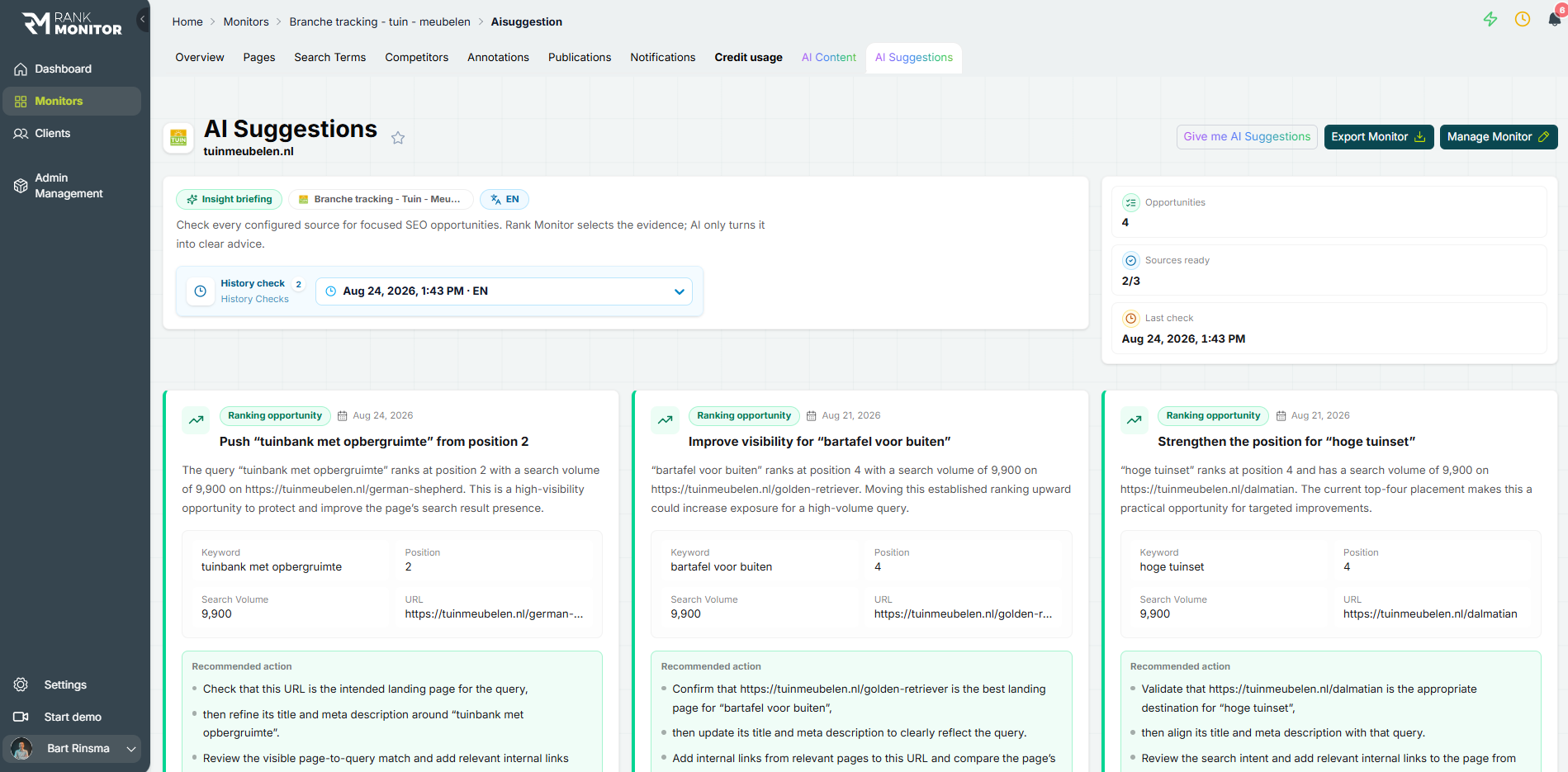
Content that performs: data-driven content optimization
Creating impactful content requires a balance of relevance and depth. AI content tools benchmark your copy against top-performing pages in search results to offer actionable recommendations:
- Content gaps: key topics or sub-questions missing from your page.
- Structure and readability: clear subheadings, concise paragraphs, and logical flow.
- Semantic relevance: related terms and context that strengthen your topical authority.
Applying these suggestions makes your pages more engaging for readers while signaling to search engines that your content is a comprehensive resource.
Smart technical audits: let AI spot your website's bottlenecks
A strong SEO strategy relies on a technically sound website. AI-driven audits scan vast amounts of data to prioritize technical issues affecting your reach. They automatically flag crawl errors, slow loading times, missing structured data (schema markup), or suboptimal internal linking structures — pointing you directly to the technical fixes that yield the highest impact.
Preparing for AI search: optimizing for generative answers and conversational queries
With AI-generated overviews appearing directly within search results, how users access information is changing. To feature as a source in AI answers and conversational search results, follow these core practices:
- Provide direct answers: structure answers to common questions clearly at the start of a section.
- Use clear formatting: present data using organized tables, bullet points, and explicit definitions.
- Implement structured data: ensure AI crawlers can accurately interpret the context of your products, articles, or services.
The pitfalls of blind automation: why human expertise remains essential
While AI offers valuable insights, relying entirely on generated copy carries risks. Search engines heavily prioritize E-E-A-T (Experience, Expertise, Authoritativeness, and Trustworthiness). AI can aggregate information, but it lacks your real-world experience, case studies, and unique perspective. Use AI as a strategic assistant for data and inspiration, but keep human editorial oversight and brand voice intact.
Action plan: 4 steps from AI insights to better search visibility
- Run an AI audit: scan your website using AI tools to map out technical errors and content gaps.
- Prioritize high-impact fixes: focus first on recommendations that directly improve search intent and user experience.
- Enhance existing content: apply AI insights to make your highest-priority pages more comprehensive and clear.
- Inject original expertise: enrich the AI-optimized structure with proprietary insights, real data, and unique case studies.